21/08/2026 | Hints from the experts
.308 Win testing with a silencer
Dear reloaders,
In recent years, silencers have become increasingly popular for civilian use. Although they are used to some extent for competitive shooting, they are found mainly on hunting rifles. When a silencer is used with standard hunting ammunition, the muzzle blast can be considerably reduced. However, the supersonic blast is still present. With a subsonic load, there is no longer a supersonic blast. However, such a load delivers considerably less energy. The use of silencers for hunting is therefore subject to legal restrictions, which vary from country to country. A silencer also noticeably reduces recoil.
However, there are also disadvantages to using a silencer. A silencer increases the overall length of the firearm. That is why rifles with short barrels are often preferred and “over-barrel silencers” are available. These extend rearwards over part of the barrel, thereby reducing the increase in the overall length of the firearm. However, a short barrel results in more unburnt powder and combustion residue in the silencer, especially when a slow-burning powder is used.
Because a silencer also affects the point of impact, the firearm should be zeroed with the silencer fitted. The muzzle velocity of the bullet and its standard deviation may also be affected. Furthermore, the first shot fired through a silencer may be louder than subsequent shots (a phenomenon known as “first-round pop”).
The Reload Swiss team tested the effect of a silencer in combination with RS powders. The tests were conducted using the popular .308 Win calibre. Three loads were tested (all at 21°C):
- A subsonic load using RS14 with a 200 gr bullet.
- A standard load using RS40 with a 168 gr match bullet.
- A standard load using RS52 with a 168 gr match bullet.
Equipment and components
The test barrel is only 450 mm long, has an 8″ twist rate, and is suitable for very heavy bullets. Although the test barrel is fitted with a threaded muzzle, an over-barrel silencer cannot be mounted because of the barrel diameter. A Svemko silencer was used for the firing tests.
For each test, 10 rounds were fired with the silencer removed and 10 with it fitted. After these 10 rounds, the silencer was removed, photographed, and cleaned.
| Calibre | .308 Winchester |
| Test barrel | Barrel length: 450 mm, 1:8″ twist rate |
| Silencer | Svemko Hunter Micro .30 |
| Case | Lapua |
| Primer | S&B LR |
| Shots per group | 10 |
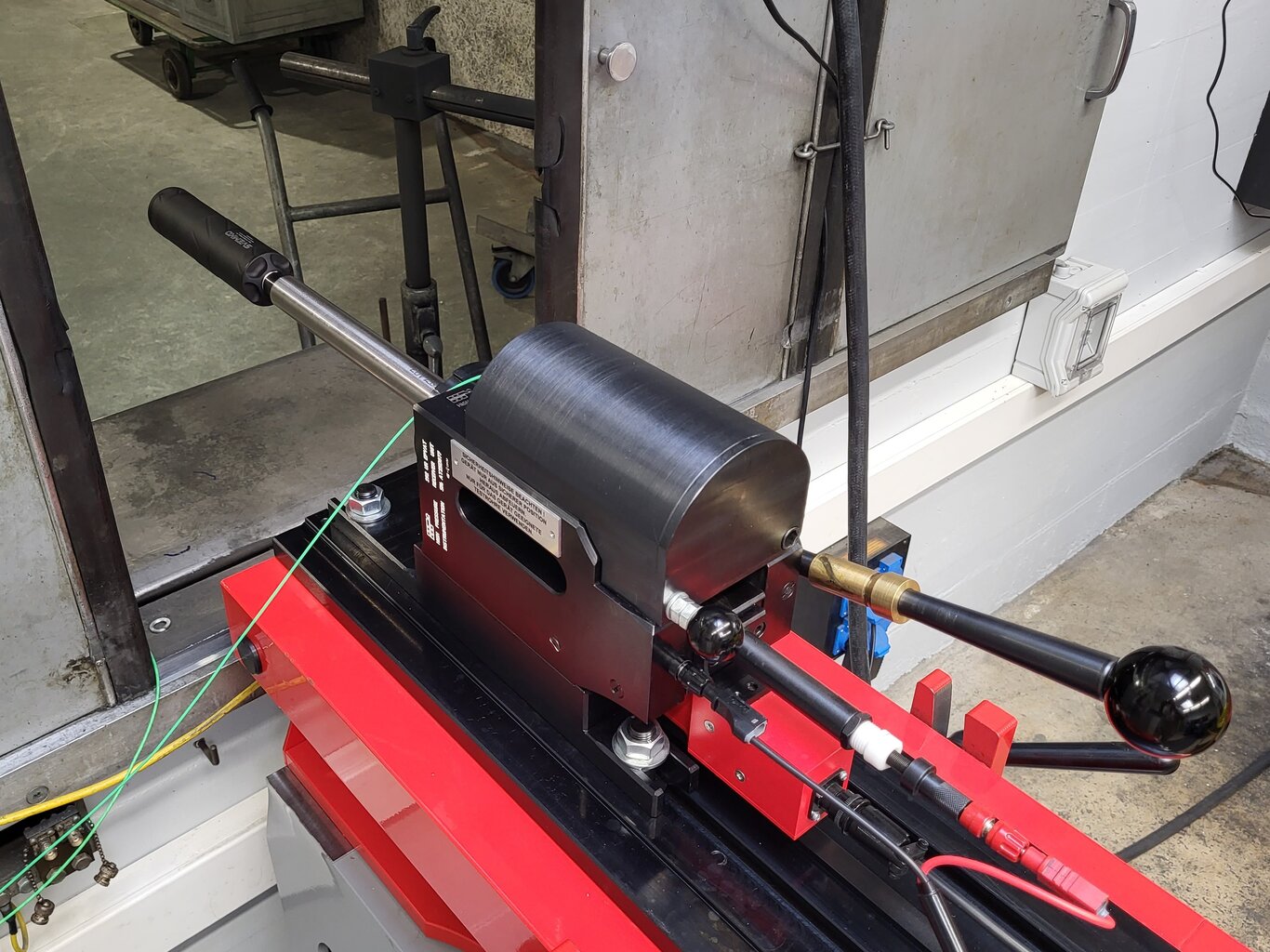
RS14 – subsonic load
A typical application for RS14 is a .308 Win subsonic load with heavy bullets. See our article “RS14 in .308 Win rifle calibre”. An identical load was prepared for both tests (SD = standard deviation):
| Load | RS14 0.68 g (10.5 gr) | ||||||||||||||||||||||||
| Case fill | 77.0 % | ||||||||||||||||||||||||
| Bullet | Lapua Subsonic B416 200 gr | ||||||||||||||||||||||||
| COL | 66.6 mm | ||||||||||||||||||||||||
|
|||||||||||||||||||||||||
When the silencer was fitted, the V5 velocity remained virtually unchanged, but the standard deviation was considerably lower. The silencer was almost clean after firing (RS14 is a very fast-burning powder and the load is relatively small).
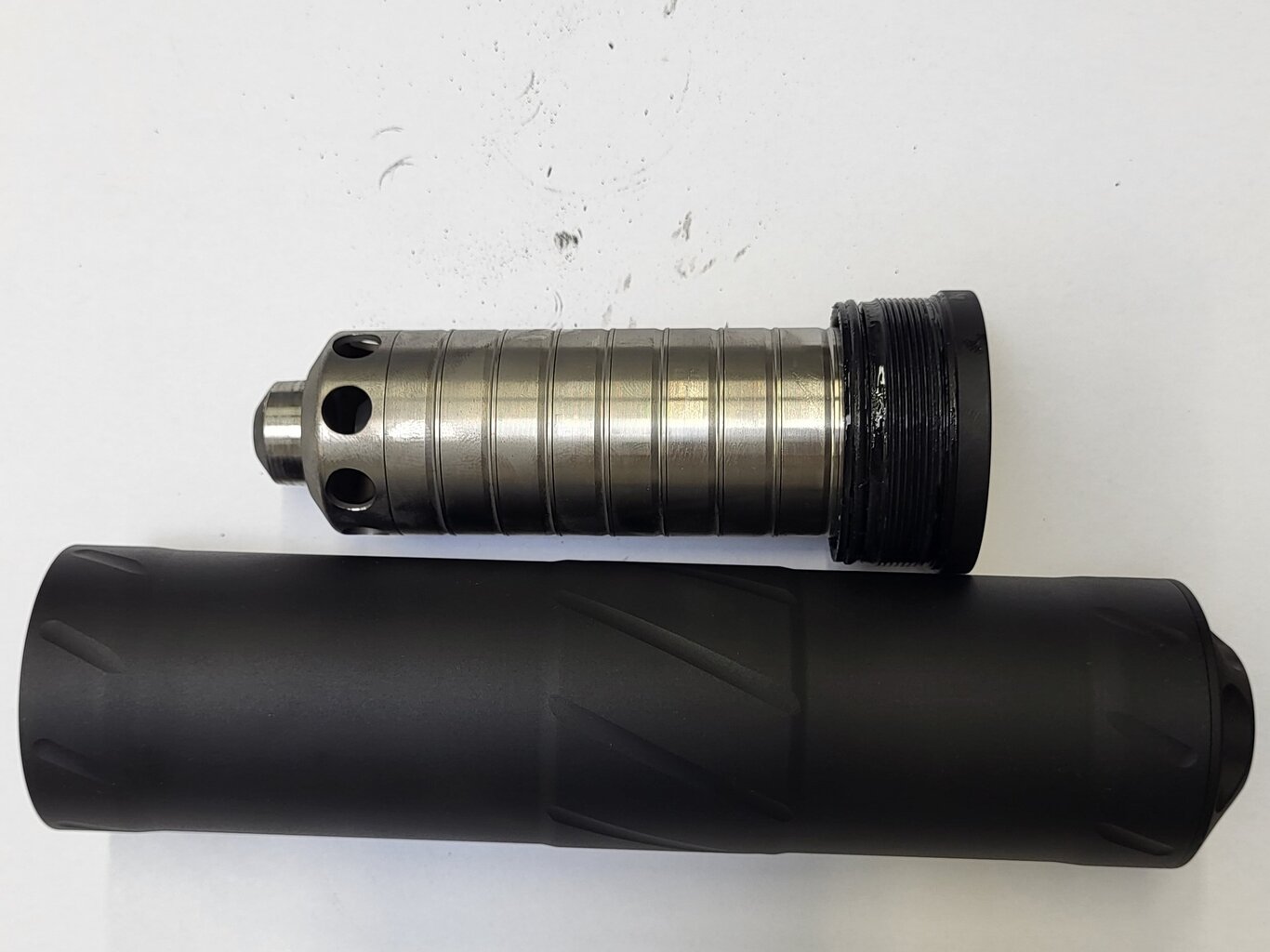
RS40 – Load for short barrels
RS40 is a relatively fast-burning powder for the .308 Win calibre when used with a 168 gr bullet. This load may be better suited to short barrels because RS40 burns completely.
| Load | RS40 2.57 g (39.7 gr) | ||||||||||||||||||||||||
| Case fill | 89.4 % | ||||||||||||||||||||||||
| Bullet | Sierra MatchKing 168 gr | ||||||||||||||||||||||||
| COL | 71.1 mm | ||||||||||||||||||||||||
|
|||||||||||||||||||||||||
The V5 velocity was slightly higher with the silencer fitted. A silencer can be regarded as an extension of the barrel. The standard deviation was also lower. The silencer was again almost clean after firing with no unburnt powder residue. It showed slightly more blackening than after using RS14.
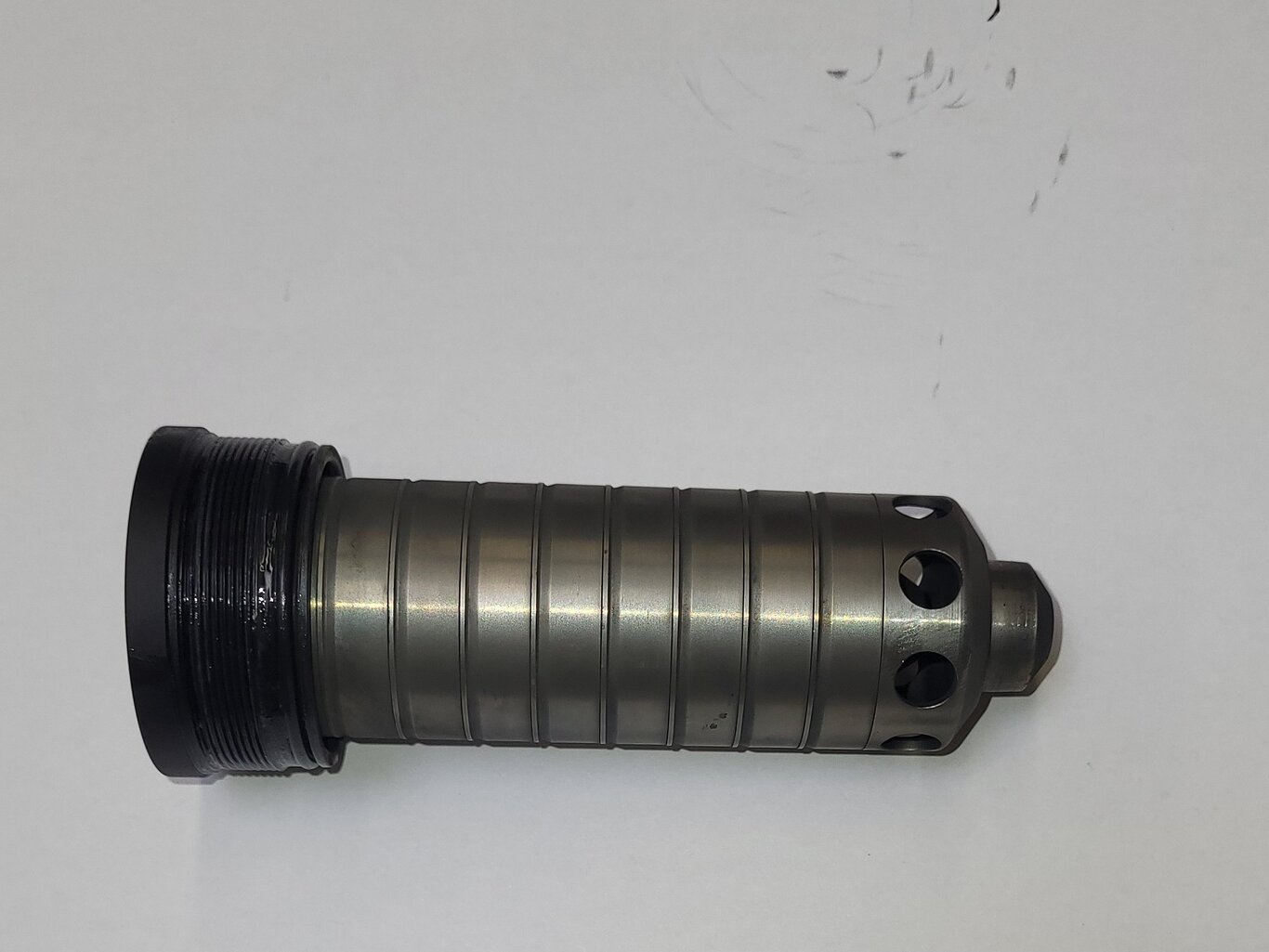
RS52 – Load for maximum performance
RS52 is a powder designed to deliver maximum performance in the .308 Win calibre. With such a short barrel, the load needs to be relatively powerful because only then will RS52 burn efficiently.
| Load | RS52 2.93 g (45.2 gr) | ||||||||||||||||||||||||
| Case fill | 100.7 % | ||||||||||||||||||||||||
| Bullet | Sierra MatchKing 168 gr | ||||||||||||||||||||||||
| COL | 71.1 mm | ||||||||||||||||||||||||
|
|||||||||||||||||||||||||
In this case, the V5 velocity was almost identical with the silencer fitted, and no increase was measured. Also in this test, the standard deviation improved with the silencer. The silencer was again fairly clean after firing with no unburnt powder residue detected. It showed slightly more blackening than after using RS40. The images clearly show the relationship between powder progressivity and soot deposits. The more progressive the powder, the more soot deposits are observed in the silencer.
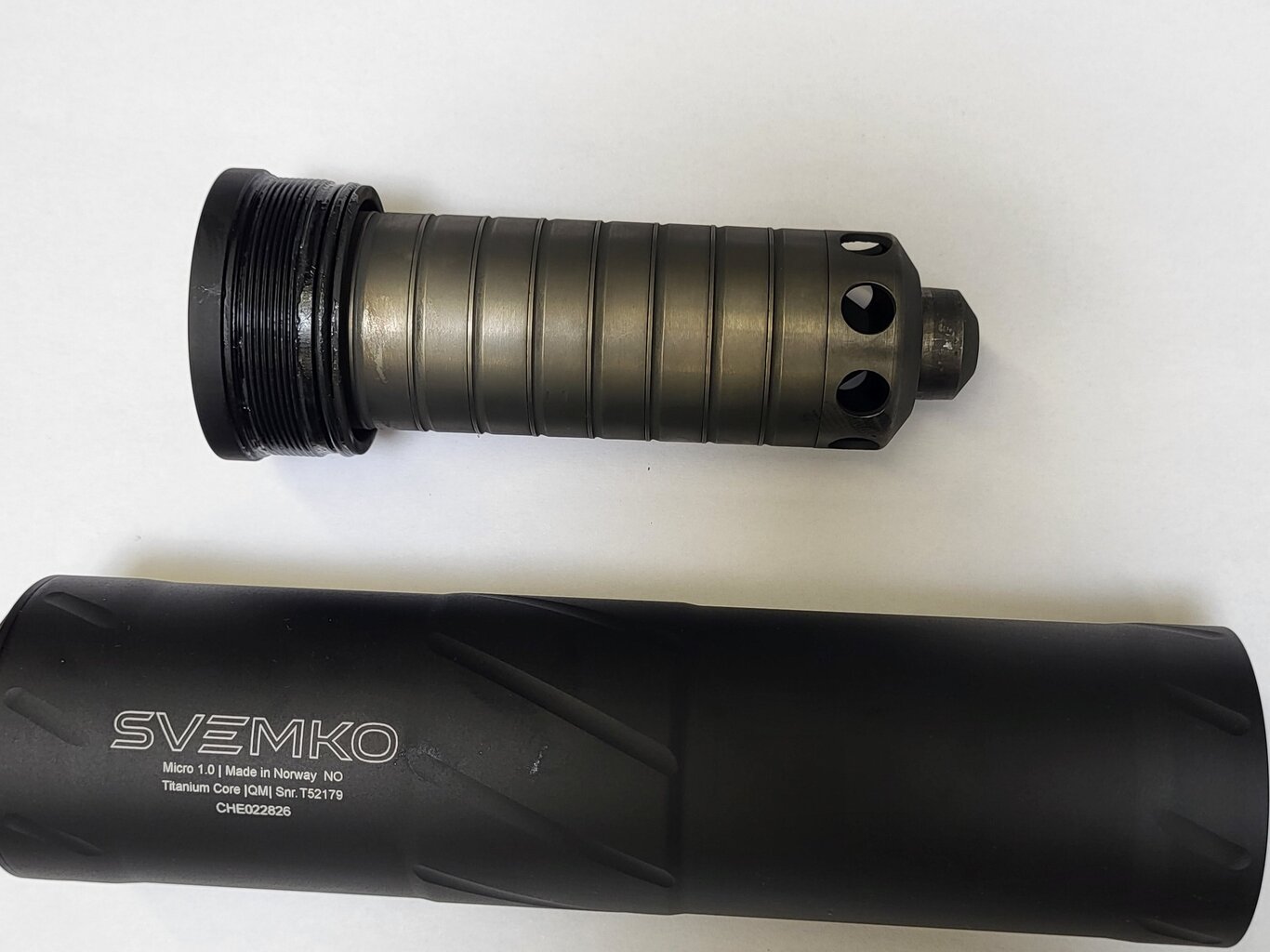
Conclusion
- The velocity is only minimally affected by the silencer.
- Practical experience reported online suggests that velocity with a silencer is often the same as or slightly higher than without one. We confirmed this with RS40. However, with RS52 powder, the velocity was atypically slightly lower.
- A good silencer can reduce the standard deviation of the muzzle velocity.
- Even a powerful RS52 load burns cleanly. There is no need to use RS40 simply because the barrel is short.
- Anecdote: The subsonic RS14 load produced so little shooting noise that the shooter, who was wearing high-quality hearing protection, did not even notice the very first shot. It is remarkable just how quiet shooting can be with the right setup.
Jan Krcmar
www.reload-swiss.com